Cryptojacking: Is Your Device Mining Crypto for Hackers?
That slow computer or hot phone might not just be aging hardware. Websites can hijack your device to mine cryptocurrency without your knowledge.
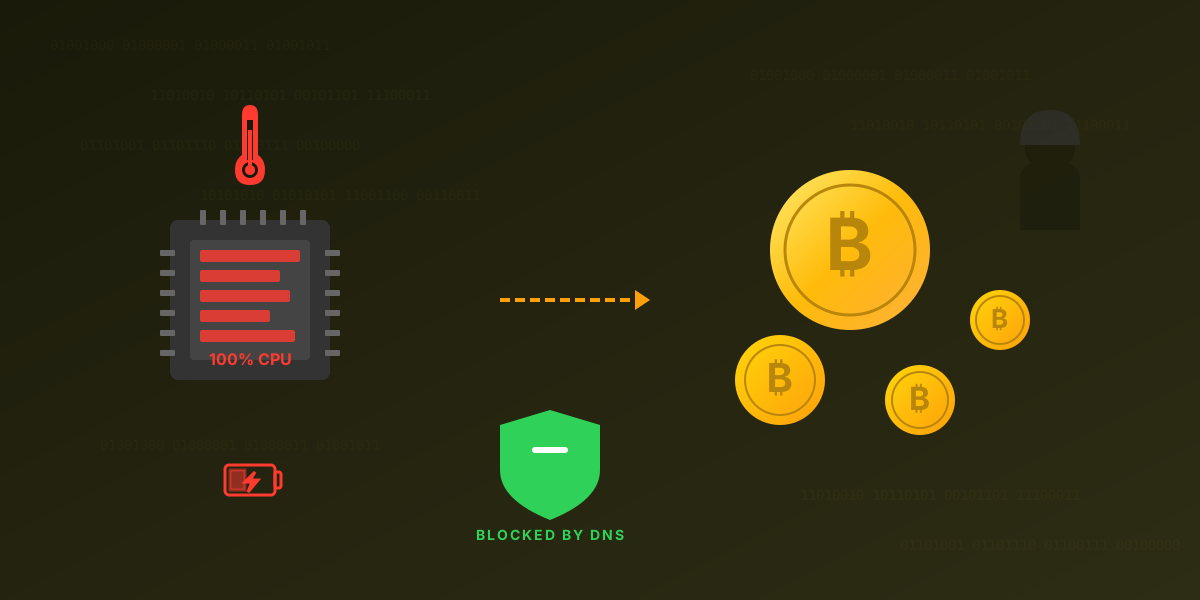
Your laptop's fan is spinning constantly. Your phone gets hot doing nothing. Your electricity bill has crept up. The culprit might not be malware in the traditional sense - it could be cryptojacking, and it's more common than you think.
What is Cryptojacking?
Cryptojacking is when someone uses your device's processing power to mine cryptocurrency without your permission. Unlike traditional mining where people invest in their own hardware, cryptojackers steal computational resources from thousands or millions of victims.
The most commonly mined cryptocurrency through cryptojacking is Monero (XMR). Unlike Bitcoin, Monero is designed to be mineable with regular CPUs and GPUs - exactly the hardware in your phone, laptop, or tablet. It's also privacy-focused, making it attractive for criminals who want to hide their earnings.
How Cryptojacking Works
There are two main ways cryptojacking happens:
Browser-Based Mining
You visit a website that contains a hidden mining script. While you're on the page, your browser runs JavaScript code that mines cryptocurrency in the background. Close the tab, and the mining stops. This type was pioneered by a service called Coinhive (now defunct), but many alternatives exist.
Malware-Based Mining
Malicious software gets installed on your device and runs mining code constantly - even when you're not browsing. This is more persistent and harmful, as it can run 24/7 without your knowledge.
Signs Your Device is Being Cryptojacked
Cryptojacking is designed to be invisible, but it leaves traces:
Mining is CPU-intensive. If your device is constantly warm or hot, especially when idle, something might be using your processor
Crypto mining consumes significant power. Unexplained battery drain on laptops and phones can indicate mining activity
If your CPU is busy mining, everything else slows down. Applications take longer to open, pages load slowly
Fans running at full speed when you're not doing anything intensive could mean hidden mining
Desktop computers running mining malware can significantly increase your power consumption
The Real Cost of Cryptojacking
You might think: "So someone's using my CPU - what's the big deal?" The costs are real:
- Electricity costs: You pay for the power used to mine someone else's cryptocurrency
- Hardware degradation: Constant high CPU usage wears out components faster - especially on laptops and phones that aren't designed for sustained heavy loads
- Reduced productivity: Your device is slower, which wastes your time
- Battery damage: Repeated heat stress reduces battery lifespan
- Security risk: If a website is running mining scripts, what else might they be doing?
"Cryptojackers are stealing from you twice - once by taking your computing power, and again by making you pay for the electricity."
Who's Behind Cryptojacking?
Cryptojacking scripts appear in surprising places:
Compromised Legitimate Sites
Hackers inject mining scripts into legitimate websites without the owners knowing. In 2018, thousands of government websites were found to be running mining scripts after a popular accessibility plugin was compromised.
Intentional Implementation
Some website owners deliberately add mining scripts as an alternative to ads. While some argue this is a legitimate revenue model, doing it without user consent is unethical and often illegal.
Pirated Content Sites
Sites offering pirated software, movies, or music often include cryptojacking as their business model. If you're not paying for the content, you're paying with your CPU.
Malicious Browser Extensions
Some browser extensions secretly mine cryptocurrency. Even extensions that seem legitimate can be purchased by bad actors and updated with mining code.
How DNS Filtering Stops Cryptojacking
Most cryptojacking scripts need to connect to mining pool servers to be useful. These servers coordinate the mining work and distribute rewards. Without this connection, the mining script is useless.
ClearDNS maintains blocklists of known cryptojacking domains:
- Mining pool servers
- Cryptojacking script distribution domains
- Command and control servers for mining malware
- Known compromised sites running mining scripts
When your device tries to connect to one of these domains, ClearDNS blocks the connection. The mining script might load, but it can't communicate with the mining pool - so no mining happens.
Protection Before It Starts
DNS filtering is proactive protection. Unlike browser extensions that detect and block scripts after they load, DNS filtering prevents your device from ever connecting to mining infrastructure. It works for all apps and all devices on your network - not just web browsers.
Additional Protection Measures
While DNS filtering is your first line of defense, here are additional steps:
- Keep software updated: Browser and OS updates often patch cryptojacking vulnerabilities
- Avoid pirated content: Piracy sites are cryptojacking hotspots
- Review browser extensions: Remove extensions you don't actively use
- Monitor system resources: Occasionally check CPU usage to spot anomalies
- Use ClearDNS: Enable our Cryptojacking category for dedicated protection
Get Protected Today
ClearDNS offers a dedicated Cryptojacking blocking category. Enable it to stop mining scripts from stealing your resources:
- Visit my.cleardns.io
- Enable the "Cryptojacking" category
- Configure your devices using our setup guides
- Enjoy a faster, cooler device
No account needed. Your CPU should be working for you, not for hackers mining Monero on the other side of the world.
Stop Cryptojacking in Its Tracks
ClearDNS blocks mining scripts before they can hijack your device. No account required.
Block Cryptojacking Now